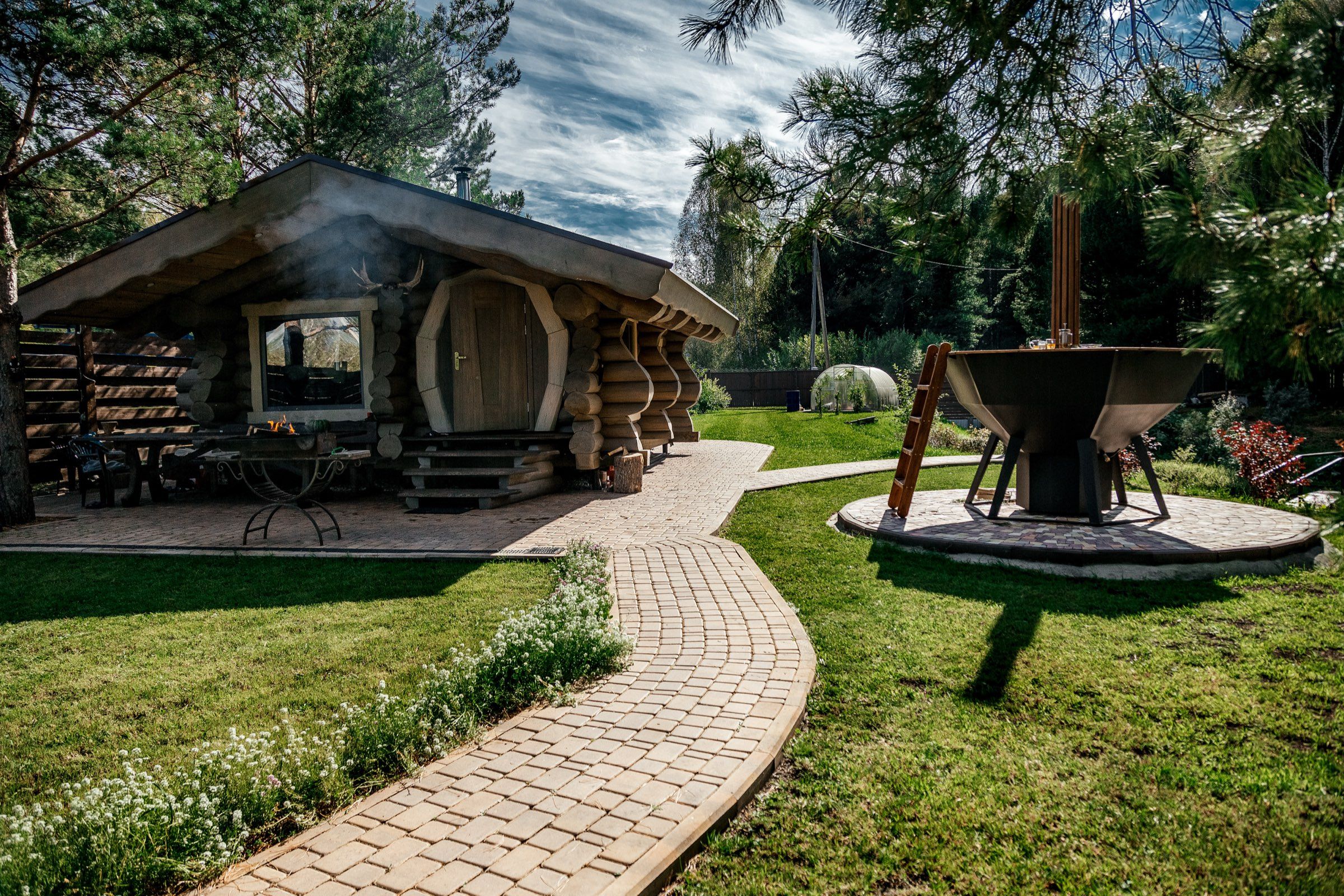
Short answer: every published figure points the same way — properties with a hot tub earn more than properties without one. The honest caveat is that none of those figures prove the tub caused it.
This is what’s actually been published, who published it, and how to work out whether a tub makes sense for your own place.
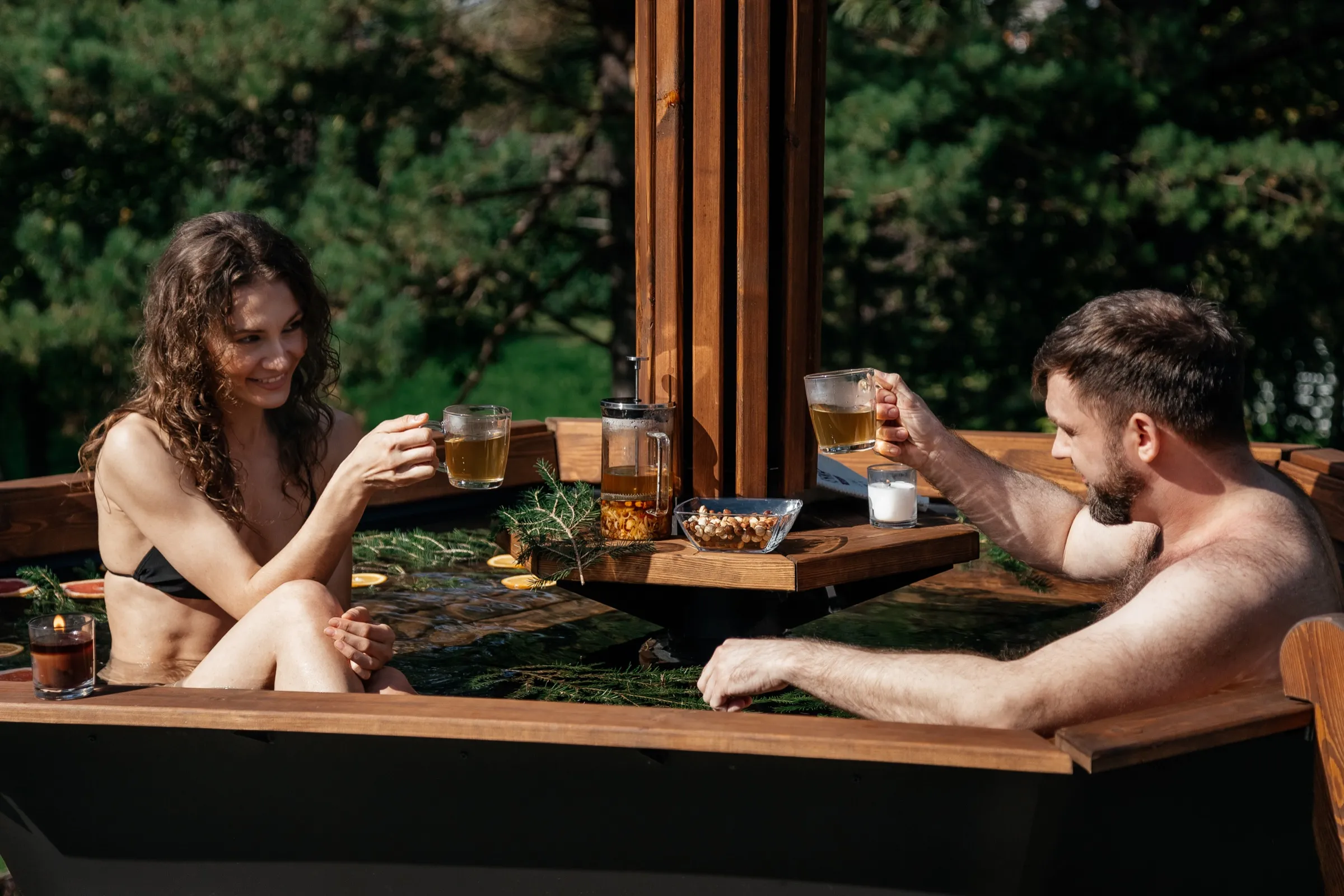
A Siberia Medium in guest use — the kind of amenity the figures below are about.
The numbers
United Kingdom. Two large holiday-letting agencies publish uplift figures from their own books:
- Sykes Holiday Cottages reports that properties with a hot tub earn around 40% more a year (via ShortTermRentalz, February 2026).
- Canopy & Stars reports 47% more revenue on average, and 25–30% higher occupancy, across its glamping portfolio (market report).
United States.
- Sage Outdoor Advisory’s 2026 glamping market overview: properties with hot tubs average $49 more per night (via International Glamping Business).
- AirDNA puts the average daily rate premium at about 14%, rising to roughly 22% in rural markets (summary of AirDNA’s amenity analysis).
- AirROI found listings with hot tubs take about 79% more revenue with slightly lower occupancy (July 2025). The sample size isn’t stated.
Denmark, the Nordics, Germany, the Netherlands. Nothing. We went looking in Danish, Dutch and German, through the national tourism bodies, the big letting agencies and the analytics firms, and found no published study that quantifies what a hot tub does to rental income in these markets. If someone quotes you a Scandinavian number, ask where it came from.
What does exist is supply: Natuurhuisje lists about 1,900 Dutch holiday homes with a hot tub, and Danish portals list a few thousand homes with a pool. Wellness features are established in these markets. Their effect on income simply hasn’t been measured in public.
Read those figures carefully
Every number above compares properties that have a tub with properties that don’t. That isn’t the same as measuring what happens when you add one.
Places with hot tubs tend to differ in other ways. They’re often newer, better furnished, better photographed, and run by owners who invest in the property generally. Some of the uplift belongs to the tub. Some belongs to everything else those owners did.
The UK figures come from agencies that also sell hot-tub-equipped stays; the US figures come from analytics vendors. None of it is independent research, and none of it is a forecast for your property.
Treat the range on its own terms: from AirDNA’s 14% rate premium up to AirROI’s 79% revenue figure, with Sykes and Canopy & Stars clustering around 40–50% in between. That spread — not a single average — is the honest picture; use it as a signal about direction, not a number to put in a business plan.
Where the uplift is largest
The pattern across every source is consistent:
- Cold and rural beats warm and urban. AirDNA’s premium is highest in rural markets; the US mountain markets show the strongest figures of all. A hot tub is worth most where the weather gives people a reason to want one.
- Shoulder season and winter are where it shows up. This is the consistent view among operators, though no one has published a reliable number for it. A tub gives people a reason to book in November, which is when an empty property costs you the most.
- Small properties benefit more than large ones. With two or four units, one amenity changes the whole offer. With forty, it’s a line in a list.
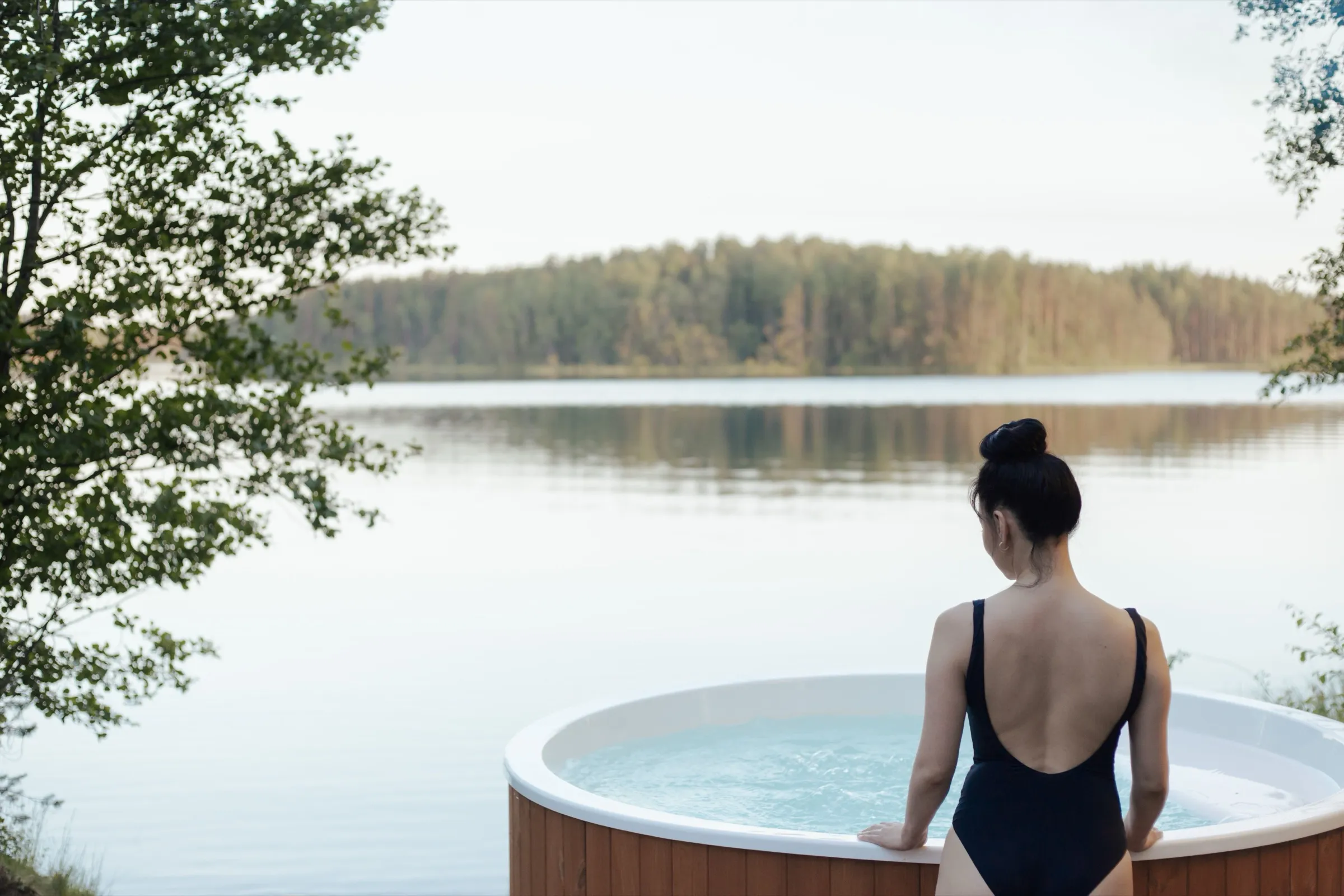
A quiet, rural setting — the kind of location where the uplift figures are strongest.
What it costs to deliver
The income side is only half of it. A wood-fired tub is a service you provide, not a machine that runs itself.
- Time between guests. Drain, scrub, refill. For a wood-fired tub, add the heat-up: ours take about 3 hours. That has to fit your changeover window, or you price a later check-in for tub stays.
- Firewood. A few dollars per heat-up, depending on your wood.
- Water. A fresh fill per stay is the simple, safe policy.
- Wear. The wooden parts of a tub in constant guest use last about 5 years before they want refreshing. Steel outlasts them by a long way, which is why we make the cedar parts replaceable.
- Staff attention. Someone has to light the fire, or teach the guest to. Several operators charge for that separately — a “tub prepared for your arrival” fee — which turns the work into revenue rather than overhead.
Working out whether it pays
Do the arithmetic with your own numbers rather than someone’s average. The shape of it:
A tub costs X. You charge Y for a session in it — either built into the nightly rate or sold as an add-on. You expect N sessions a year. Payback in years = X ÷ (Y × N).
A worked example, with numbers you should replace:
- Tub and delivery: $5,000
- Charged per session: $65 — a common range is $60–70 for a prepared tub
- Sessions sold: 100 a year
- Extra income: $6,500 a year, minus roughly $500 for wood, water and cleaning
- Payback: a little under 10 months
Halve the sessions to 50 and it’s under 2 years. Sessions, not price, is the number worth stress-testing — it’s the one you control least in the first season.
Two things this arithmetic leaves out, both in your favour: the tub also fills nights that would otherwise be empty, and it gives you something to show in photos, which is what makes people click.
Wood-fired or electric, for a rental
The trade-off is different for an operator than for a homeowner.
Wood-fired is the simpler machine. No wiring, no pump, no heater element, no control board — so there’s very little that can fail in the middle of a season, and no electrician to call when it does. It stands empty between bookings without harm, and drained, it doesn’t fear a frost. It also works where there’s no power at all, which is often exactly where the best spot on a property is. The cost is attention: someone has to light it.
Electric asks less of the guest and more of you. It’s usually the more expensive tub to buy and to run, and if it has a pump and a filter, those are two more things on a maintenance schedule — filters, water chemistry, and a service call when a pump goes. What you get for that is a tub a guest can step into on arrival with no instructions.
Electric suits you if your changeover window is tight, guests must be able to use it unattended, and you have staff who keep water chemistry to a schedule.
The most common mistake is buying a tub that’s too much work for the way your property actually runs. Be honest about who’ll be lighting the fire.
If you take one thing
There’s good evidence that hot tubs correlate with higher income, strongest in cold and rural places, and no evidence at all of what they do in a Danish or Nordic setting. Run your own numbers, start with one tub, and measure what happens to your shoulder season.
If you’d like help with the arithmetic for your property, that’s what our page for businesses is for — or write to us and we’ll go through it with you.